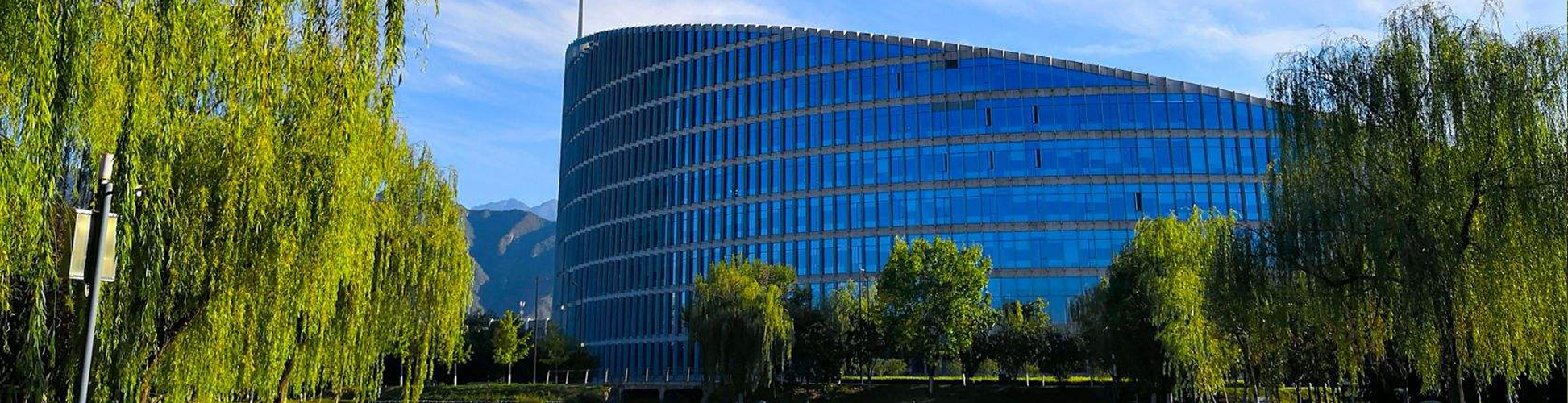
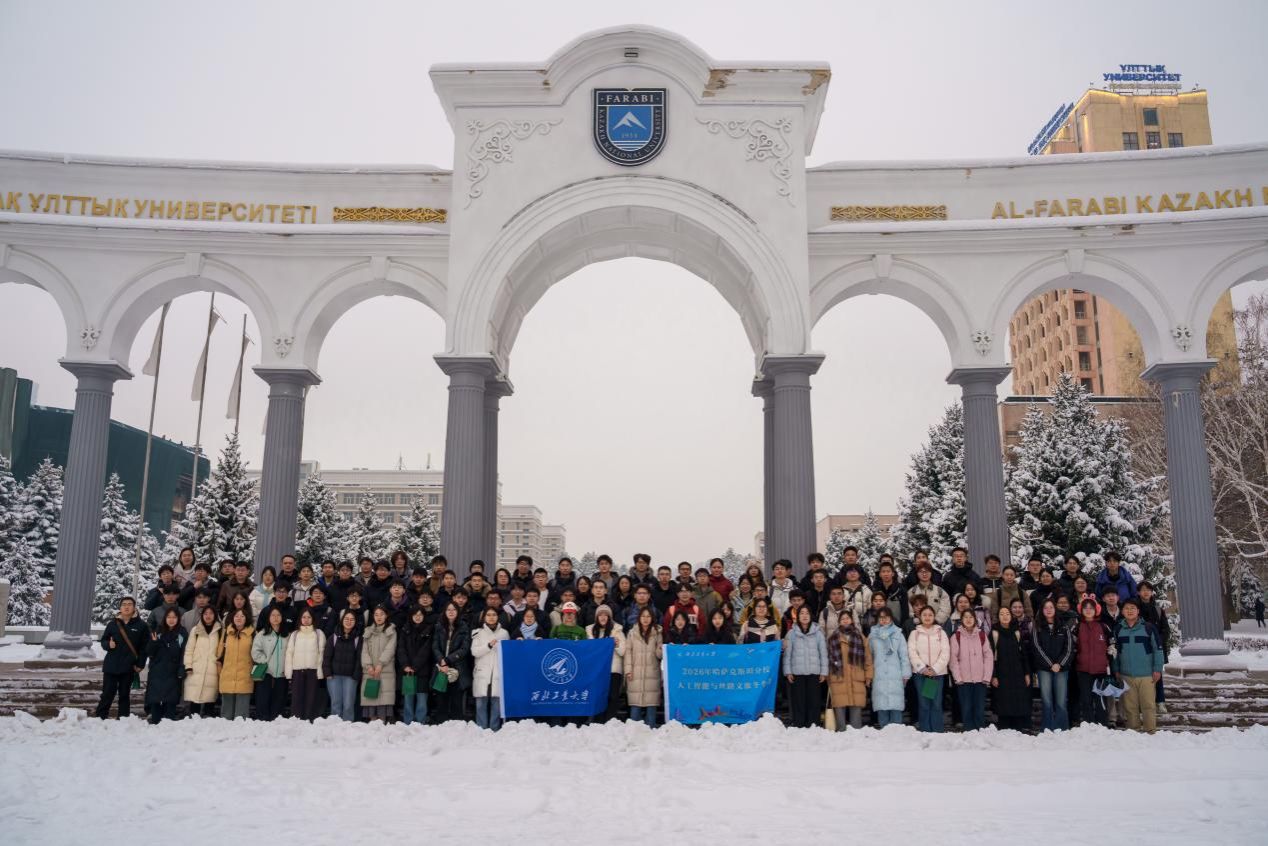
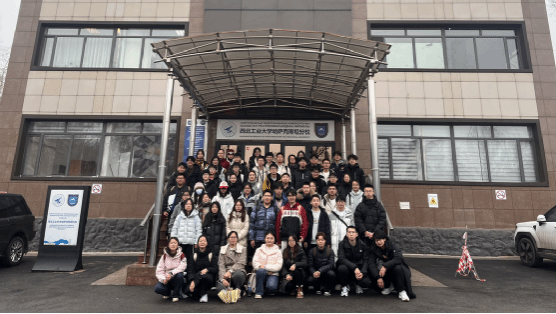
To effectively broaden students' international horizons and enhance their global competence, from February 22 to 28, 2026, the School of Electronics and Information organized 40 students, led by Guo Yuan, the school's Foreign Affairs Secretary, to Al-Farabi Kazakh National University (hereinafter referred to as "KazNU") in Kazakhstan for a 7-day "Artificial Intelligence and Silk Road Cultural Tourism" winter camp study tour. During the trip, students attended multiple high-level academic lectures, visited research platforms such as the Supercomputer Center and Robotic HUB, and engaged in in-depth exchanges with KazNU faculty and students. Leveraging the Northwestern Polytechnical University Kazakhstan Branch Campus (hereinafter referred to as the "Kazakhstan Branch Campus") as an important exchange platform, the program focused on the frontier theme of "High-Performance Computing and Intelligent Scientific Computing," deepening students' professional understanding of related fields and expanding their international perspectives through immersive academic experiences and cultural exploration.
Learning and Exchange
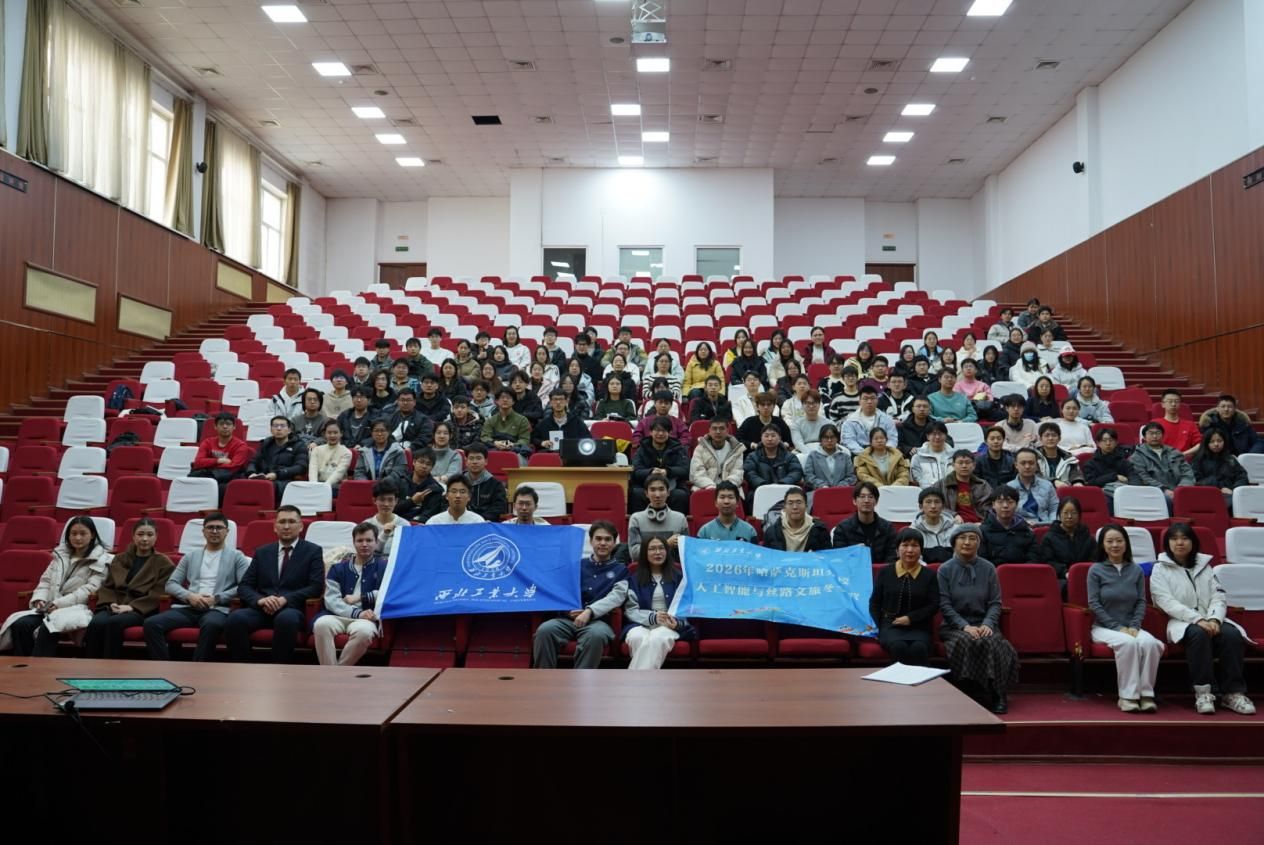
Centered on the academic theme of "High-Performance Computing and Intelligent Scientific Computing," students undertook a seven-day systematic academic program at KazNU's Faculty of Information Technology and Artificial Intelligence, benefiting greatly. Through the deep integration of core courses, academic seminars, and research platform visits, students deepened their professional knowledge and broadened their international perspectives through the alternation of theory and practice.
|
|
| 
|
Dr. Yerzhan Kenzhebek explained the traditional paradigms for solving partial differential equations. Using the Buckley-Leverett two-phase flow model, the course vividly demonstrated how to train networks to fit fluid dynamics equations, giving students a completely new understanding of the integration of scientific computing and artificial intelligence. Professor Irina Ualiyeva's course on AI-driven low-resource language processing introduced a text simplification framework based on multilingual BERT, which makes complex texts more accessible to the public through semantic preservation and structural optimization. This course showed students the broad application prospects of AI technology in promoting language interoperability and mutual learning among civilizations.
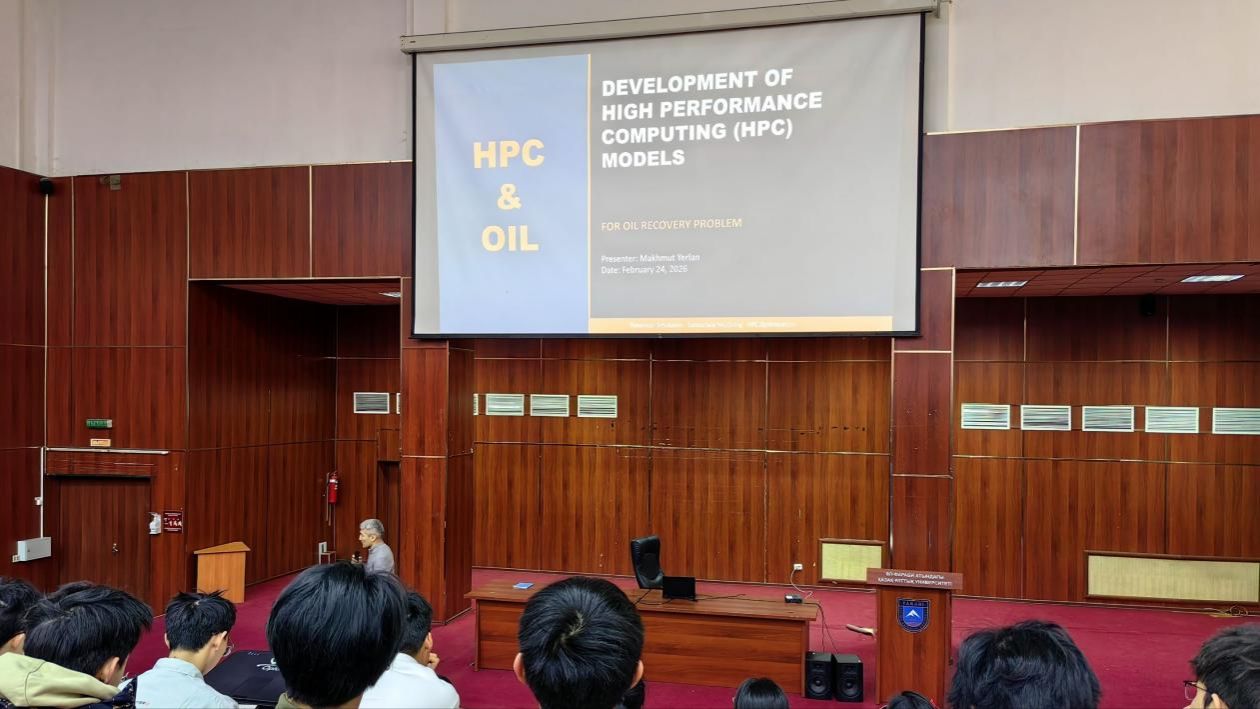
In the High-Performance Computing (HPC) special course, lecturer Yerlan Makhmut, using oil and gas extraction model development as the application context, systematically explained the three major parallel computing technologies of OpenMP, MPI, and CUDA, giving students a clearer understanding of the basic principles and engineering applications of parallel computing. The adaptive numerical grid course, taught by Dr. Olzhas Turar, demonstrated the core algorithms of grid generation and optimization and their applications in fluid mechanics, electromagnetic field simulation, and other fields, helping students understand the fundamental role of grid technology in scientific computing. The advanced computing technology course, taught by Associate Professor Baragul Matkerim, systematically introduced frontier trends such as heterogeneous computing and quantum computing, enabling students to gain a more comprehensive grasp of the future direction of computing technology.
Laboratory Visits
Beyond coursework, students also visited the Kazakhstan Branch Campus. With the warm reception and detailed introduction by Kazakh faculty, students learned about the branch campus's journey from proposal to inauguration and rapid development, understanding that as the first branch campus established by a top Chinese university in Kazakhstan, it is not only an overseas extension of quality educational resources but also provides intellectual support for the China-Kazakhstan permanent comprehensive strategic partnership.
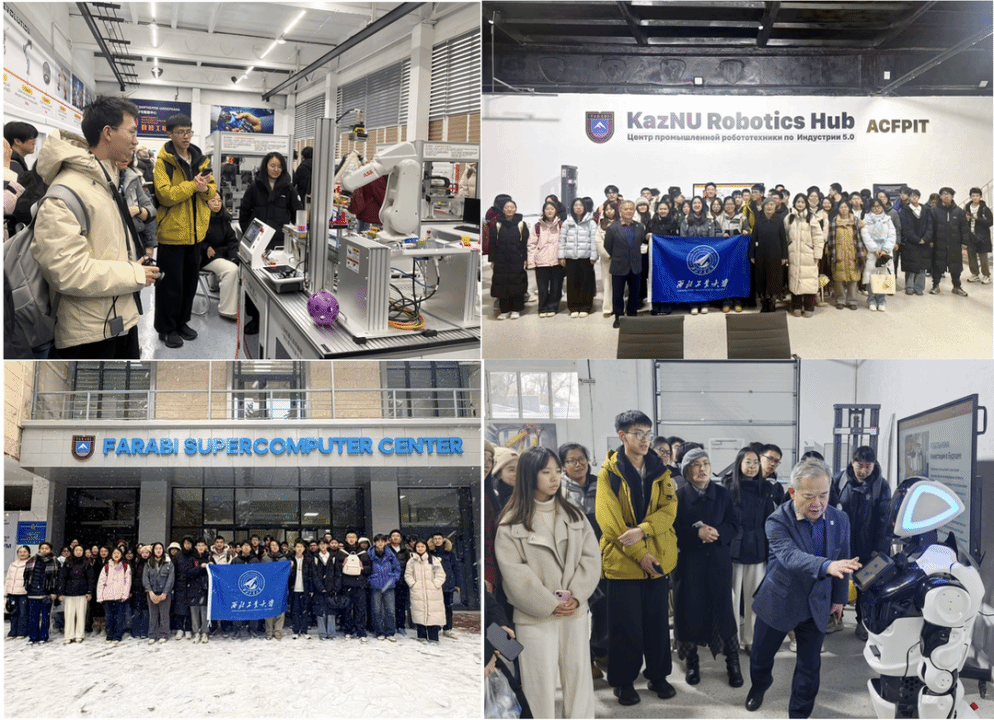
Students also visited multiple research platforms at KazNU, experiencing firsthand the research atmosphere and innovative vitality of a top Central Asian university. At the Al-Farabi Supercomputer Center, upon learning that this center—with peak computing capacity reaching tens of quadrillions of operations per second—not only supports frontier research in quantum chemistry and gene sequencing but also maintains close cooperation with Chinese research institutions under the Belt and Road Science, Technology and Innovation Cooperation Action Plan, students deeply felt the charm of borderless scientific and technological innovation and gained a more intuitive understanding of the strategic significance of China's computing technology going global. Entering the Farabi Hub incubation center, the open office spaces and young entrepreneurial teams impressed students. Seeing that the university provides startup teams with free office space, entrepreneurial mentorship services, and assistance in connecting with investors, students truly appreciated the proactive role of universities in promoting technological innovation and achievement transformation. At the robotics laboratory, students visited two distinctive research spaces. In the KUKA Robotics Laboratory, industrial robot models and control system chips were neatly displayed, with technical diagrams showcasing robot applications in automotive manufacturing, aerospace, and other fields. Upon learning that KUKA is a brand under China's Midea Group and an important achievement of China's manufacturing global layout, students felt a deep sense of pride. In the Huibo Robotics Laboratory, the intelligent sorting task demonstrated on-site by the teacher was deeply impressive—the robotic arm, relying on its independently developed visual recognition system, accurately grasped and sorted different items on the conveyor belt, with the entire process flowing smoothly and efficiently. Students eagerly took out their phones to capture this wonderful moment, sincerely marveling at the hard power of China's intelligent manufacturing.
Cultural Experience
During the winter camp, students not only learned frontier knowledge in KazNU classrooms but also experienced the warmth and pulse of the city in the streets and alleys of Almaty. Strolling through Panfilov's 28 Guardsmen Memorial Park, where snow-covered pines and solemn monuments of honor complemented each other and peace doves circled overhead, students felt the weight of history and the preciousness of peace. Taking the cable car from the foothills to Shymbulak Mountain, the Tian Shan snow ridges glistened in the sunlight; students gazed at the distant continuous snow peaks from the summit, immersed in the purity and magnificence of heaven and earth. Finally, visiting the Museum of Contemporary Art, a postcard captured this journey as an eternal memento.
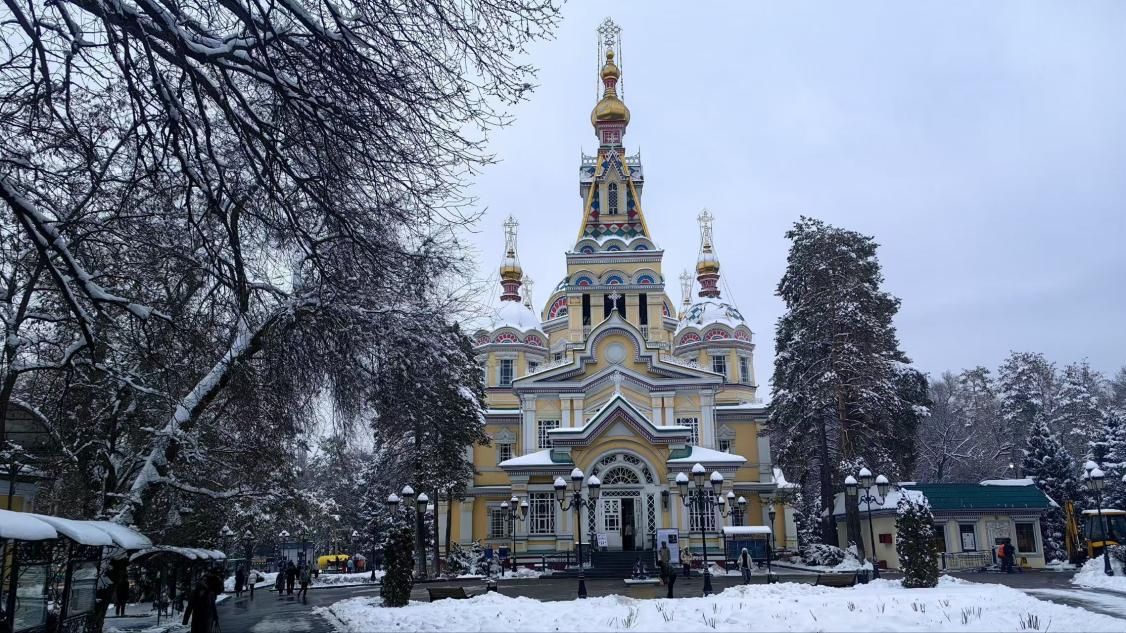
From the computing pulse of the laboratory to the snow-capped peaks of Shymbulak, this seven-day cross-border study tour was not only a "long march" of professional knowledge but also a deep cultural resonance. Students broadened their academic boundaries in KazNU classrooms, felt the warmth of the Silk Road in the streets of Almaty, and gained unforgettable growth experiences through the integration of professional knowledge and international perspectives. The successful conclusion of this winter camp not only added a brilliant chapter to China-Kazakhstan youth science and technology exchanges but also planted seeds of serving the country through science and technology and connecting with the world in every student's heart.
Student Reflections
Wang Jiaxiang: School of Electronics and Information, Class of 2023, Communication Engineering 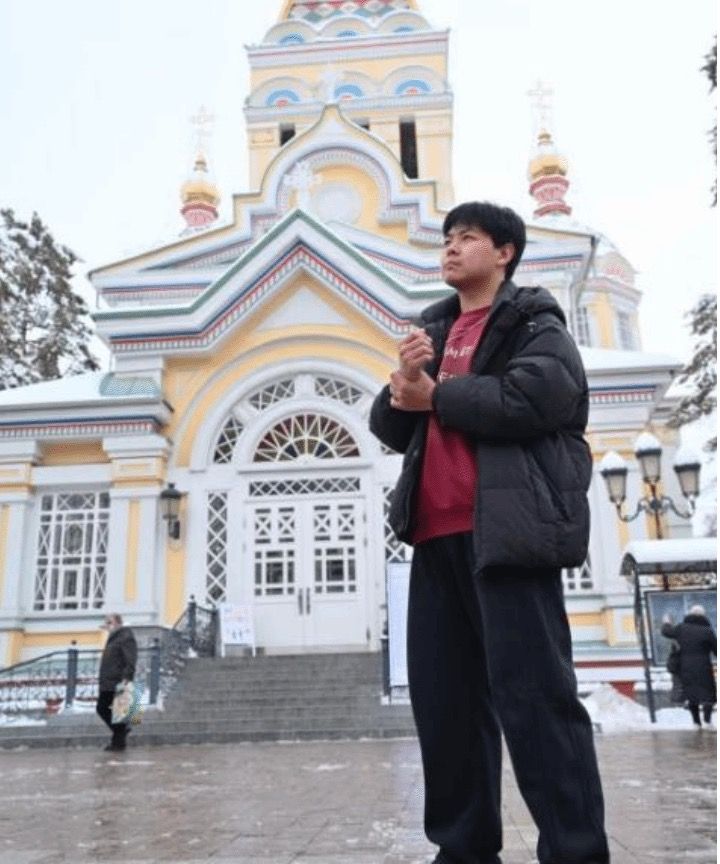
In late February, Almaty was covered in snow for days. During the winter camp, we shuttled between campus and city: feeling the frontier of computing power at the Farabi Supercomputer Center, listening to Professor Yerlan Makhmut explain oil and gas models, and learning about the low-resource language AI technology presented by Irina Ualiyeva. Beyond academics, the city's everyday life was equally memorable. On our free day, we trudged through snow to visit the Ascension Cathedral, feeling a moment of tranquility amid flickering candlelight; nearby at the 28 Guardsmen Memorial Square, the eternal flame burned in the wind and snow, making the preciousness of peace even more vivid. This winter encounter had academic depth, cultural richness, and the warmth of life—becoming the most authentic memory of this trip.
Guo Jingjing: School of Electronics and Information, Class of 2024, Electronic Information Major Category
| 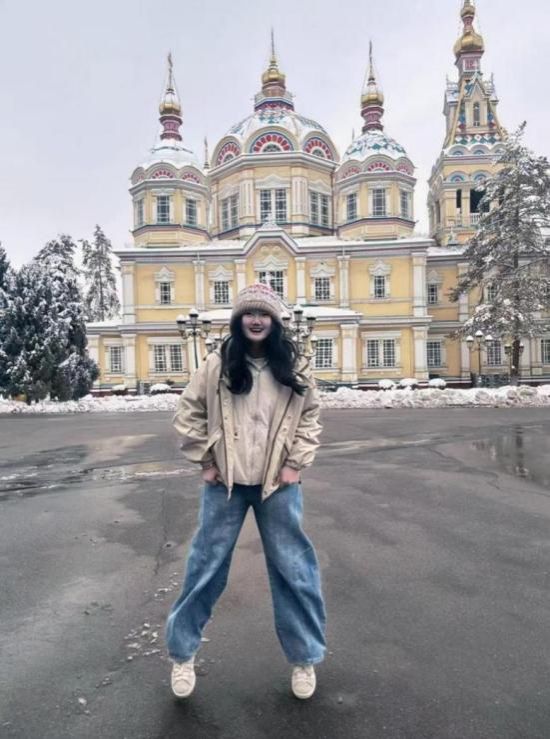 |
The week-long study tour at Kazakh National University left a deep impression through the blend of academics and daily life. Courses centered on computer intelligence, electronic information, and related fields; the industrial application cases of intelligent algorithms shared by professors allowed me to step outside my usual learning framework and experience professional thinking under different educational systems, gaining a more genuine understanding that technology knows no borders and learning requires broadening one's horizons. In spare time, the city experience was equally fulfilling. From exotic flavors at daily breakfast to local specialties like horse meat dishes, cultural differences were evident in every dietary detail. Though only a week, it allowed me to gain much in both professional knowledge and cultural experience. I've begun thinking about incorporating what I learned into future course projects and learning to view the world's diversity with a more open mindset.
Guo Jiahui: School of Electronics and Information, Class of 2024, Electronic Information Major Category
| 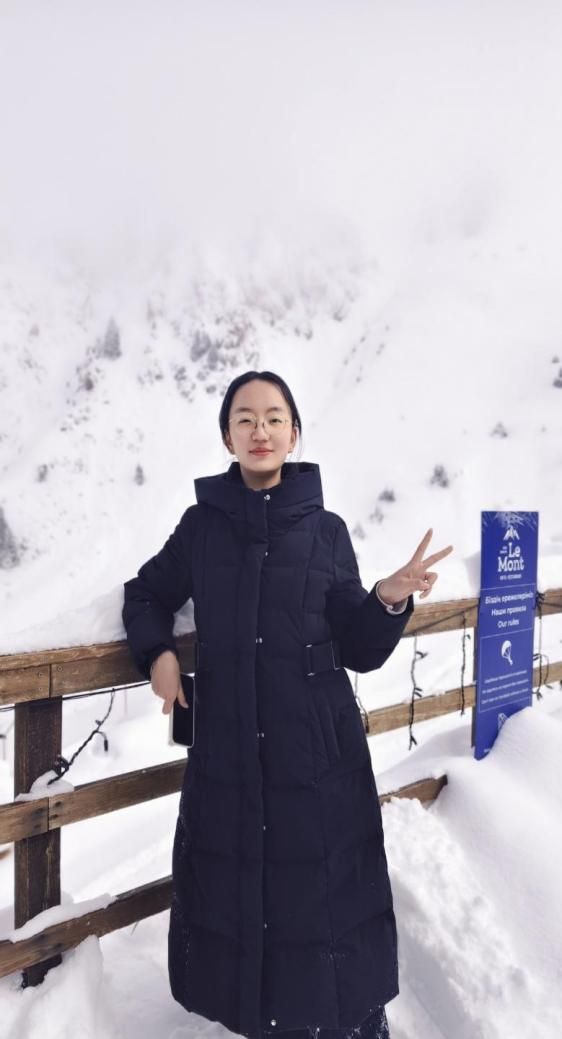 |
The seven-day Kazakhstan Branch Campus winter camp concluded amid the heavy snow of Almaty. For me, this was not only an academic exchange and cultural experience but also a journey of growth through stepping out of my comfort zone. I had felt apprehensive before departure, but upon stepping onto campus and seeing the enthusiastic staff, that unease quietly dissipated. At the opening ceremony, the department chair's expectations made me understand that the core of this journey was not "how much knowledge to learn" but "whether one dares to take the first step." Over seven days, my greatest change came from "taking initiative." From summoning courage to ask researchers questions in the laboratory for the first time, to engaging in discussions with classmates; from adapting to jet lag and familiarizing myself with an unfamiliar campus, to coordinating schedules and solving problems independently—I was no longer the student who habitually stood on the sidelines and relied on others. Every proactive attempt brought unprecedented fulfillment. This experience taught me to communicate proactively and cultivated the courage and resilience to face the unknown. Growth is never achieved overnight but accumulates through stepping out of one's comfort zone step by step. In the future, I will carry this strength forward, learning more proactively and facing challenges more calmly.
Mou Yiran: School of Electronics and Information, Class of 2023, Electronic Information Engineering
| 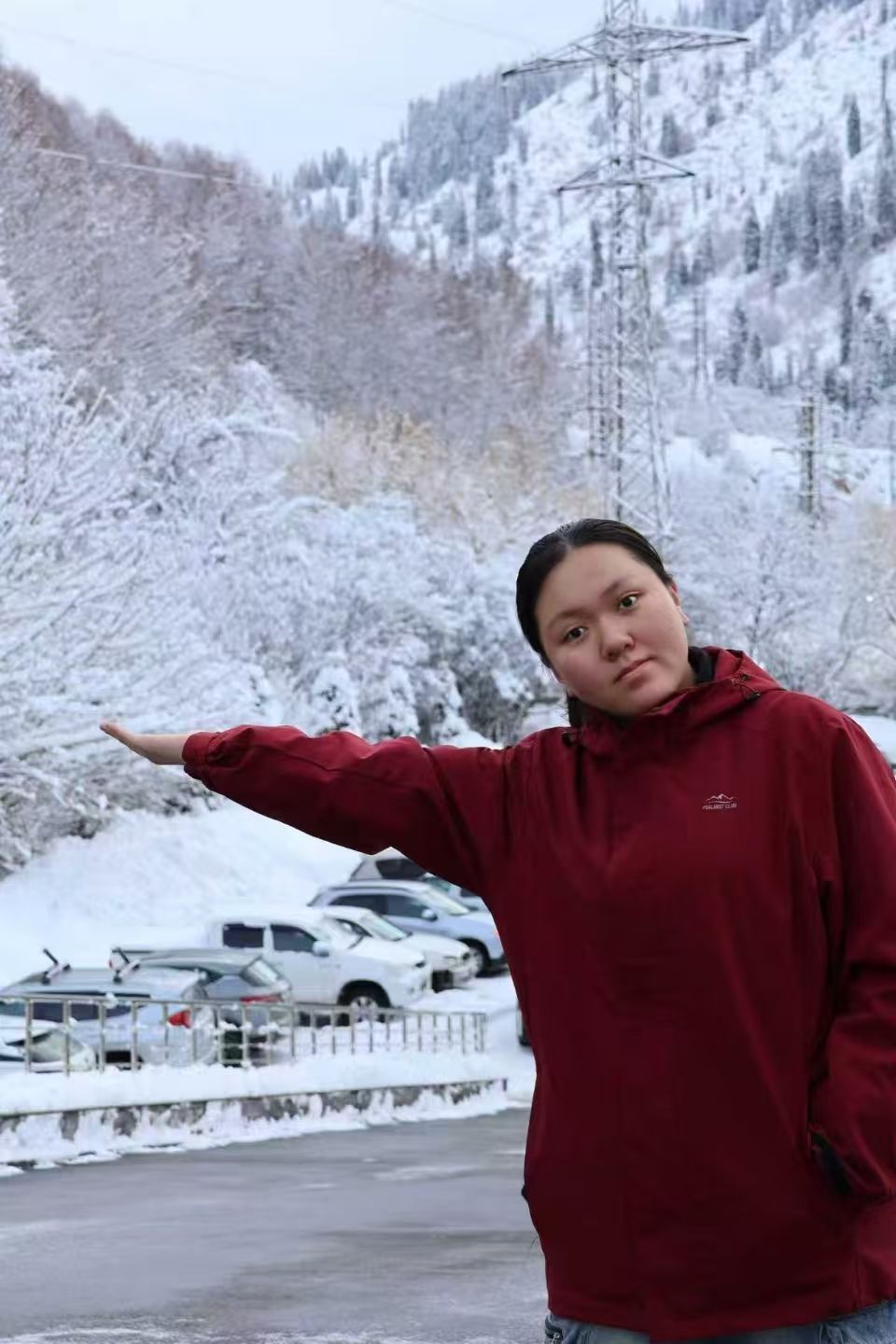 |
Standing at the foot of the Tian Shan mountains in Almaty, with glistening white snow and majestic peaks complementing each other, I deeply felt the wonderful integration of nature and technology on this ancient land. This study tour was not only an academic exploration but also a dialogue of civilizations across borders. True artificial intelligence should not be an ivory tower in the laboratory but should be rooted in local needs and solve practical problems. From Chang'an to Almaty, from the ancient Silk Road to the digital Silk Road, what has changed is the mode of transportation; what remains unchanged is the courage to explore the unknown and the openness and inclusiveness of mind. This study experience will become an important coordinate in my academic career, inspiring me to delve deeper into the field of artificial intelligence and contribute my youth to building closer China-Kazakhstan science and technology cooperation.
Wang Shuzhen: School of Electronics and Information, Class of 2023, Communication Engineering
| 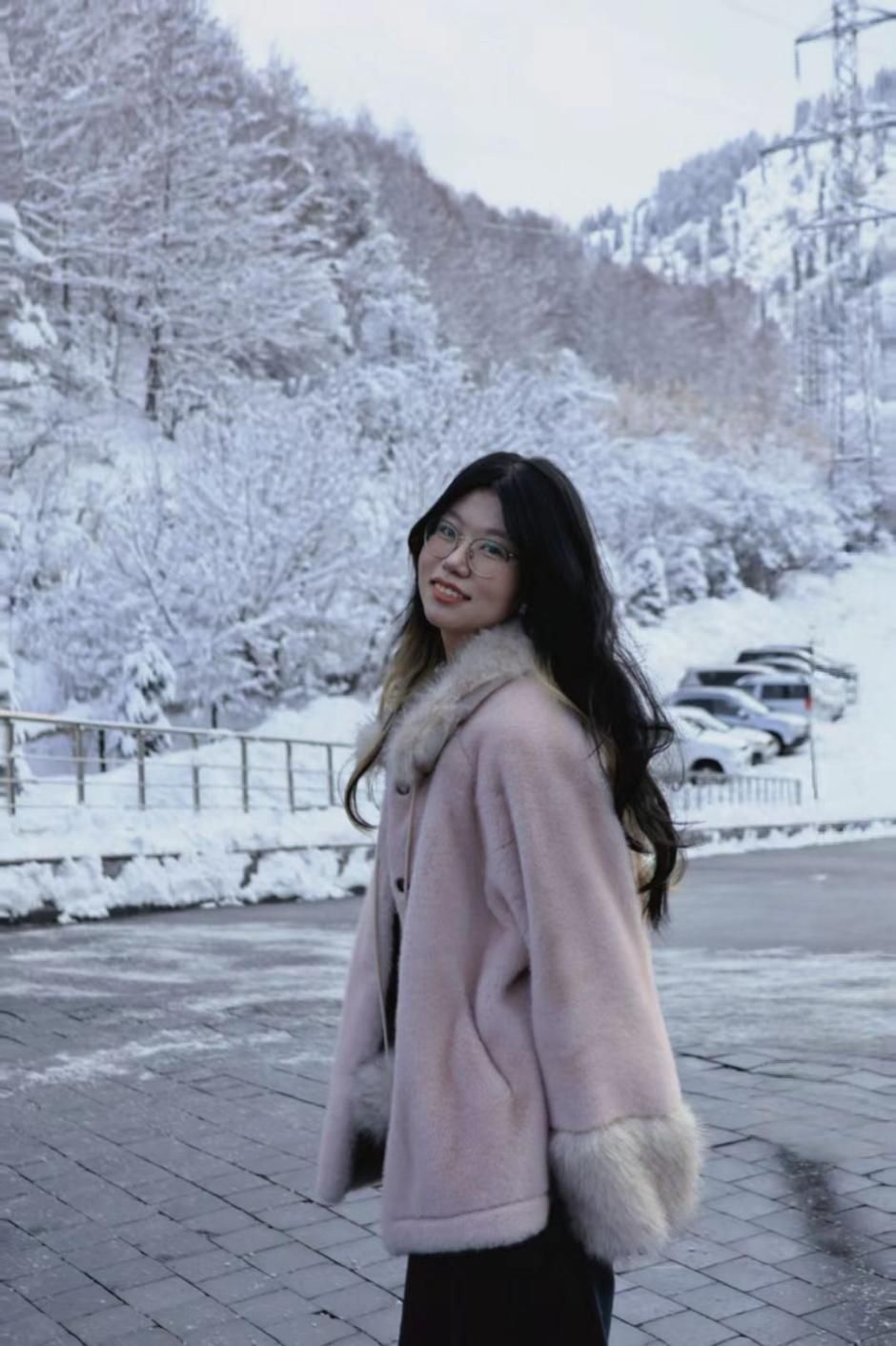 |
In the classrooms of Almaty, frontier knowledge of artificial intelligence became clear and tangible through professors' accessible explanations. From algorithm theory to discussions of practical application scenarios, I felt the power of borderless technology. Visiting the modern campus and laboratories of the Kazakhstan Branch Campus allowed me to witness firsthand how the sharing and deep integration of quality educational resources under the Belt and Road Initiative are bearing solid fruit. This winter camp was not only a training program in AI knowledge but also a window. It gave me a more three-dimensional perspective to understand the vision of connection and responsibility that young students should have in the process of building a community with a shared future for mankind. I will treasure this experience in my heart, turn it into a warm and bright light on my path forward, and look forward to one day contributing my modest efforts to scientific and technological dialogue with what I have learned.
Liu Yiming: School of Electronics and Information, Class of 2023, Electronic Information Engineering
|
|
| 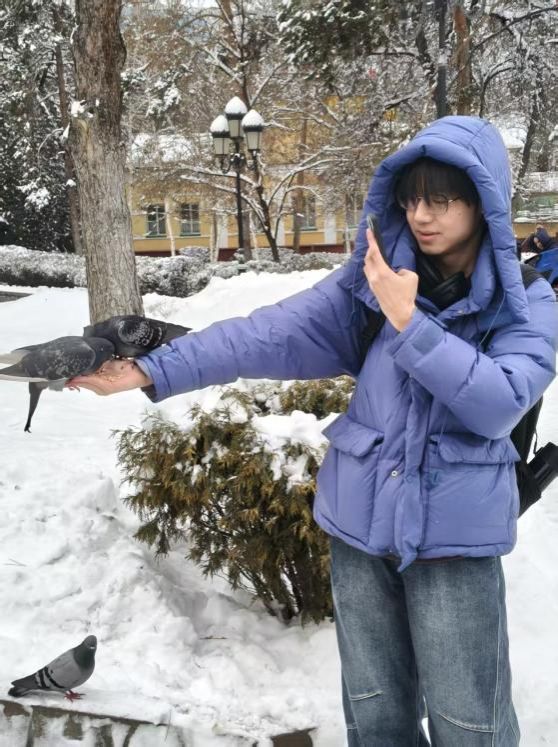 |
The seven-day exchange trip to Kazakhstan was a novel exploration beyond textbooks and a growth experience full of surprises. Entering Al-Farabi Kazakh National University, the hardcore technology of the Supercomputer Center and the cutting-edge achievements of the Robotics Center allowed me to immersively experience the research charm of a Central Asian university; frontier professional lectures also opened new horizons for my electronic information studies; the visit to the Kazakhstan Branch Campus made me feel the warm connection of China-Kazakhstan exchanges. In leisure time, strolling through the local area—the serenity of mosques, the grandeur of snow-capped mountains, mixed with the everyday bustle of shopping malls—the diverse urban atmosphere was intoxicating. This study tour allowed me to see the world and learn new things, and to better understand the beauty of cultural integration. Going forward, I will carry this harvest, explore along my professional path with a broader vision, and continue pursuing my own passions.
Photos and Text: Winter Camp Participants
Review: Yao Rugui